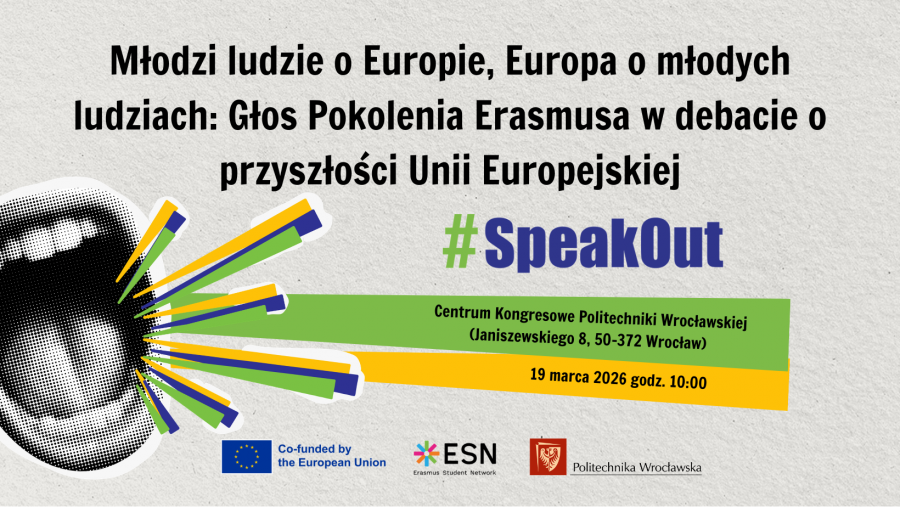


On March 19, 2026, the conference "Młodzi ludzie o Europie, Europa o młodych ludziach: Głos Pokolenia Erasmusa w debacie o przyszłości Unii Europejskiej" took place at the Congress Centre of Wrocław University of Science and Technology. The event was organised by Erasmus Student Network Poland, Erasmus Student Network Wrocław Tech and Wrocław University of Science and Technology as part of the international Speak Out project.
The event placed young people at the centre of the debate on the future of Europe, raising key questions: do young people have a real impact on decisions made at the European level, and if so, how can they use it? The conference created a space for discussion on the role of youth in public life, barriers to engagement, the functioning of the European Union and the importance of mobility and international experiences in building active citizenship.
Opening and the inaugural panel
The conference was opened by representatives of Wrocław University of Science and Technology and Erasmus Student Network, who highlighted the importance of dialogue between young people and public institutions.
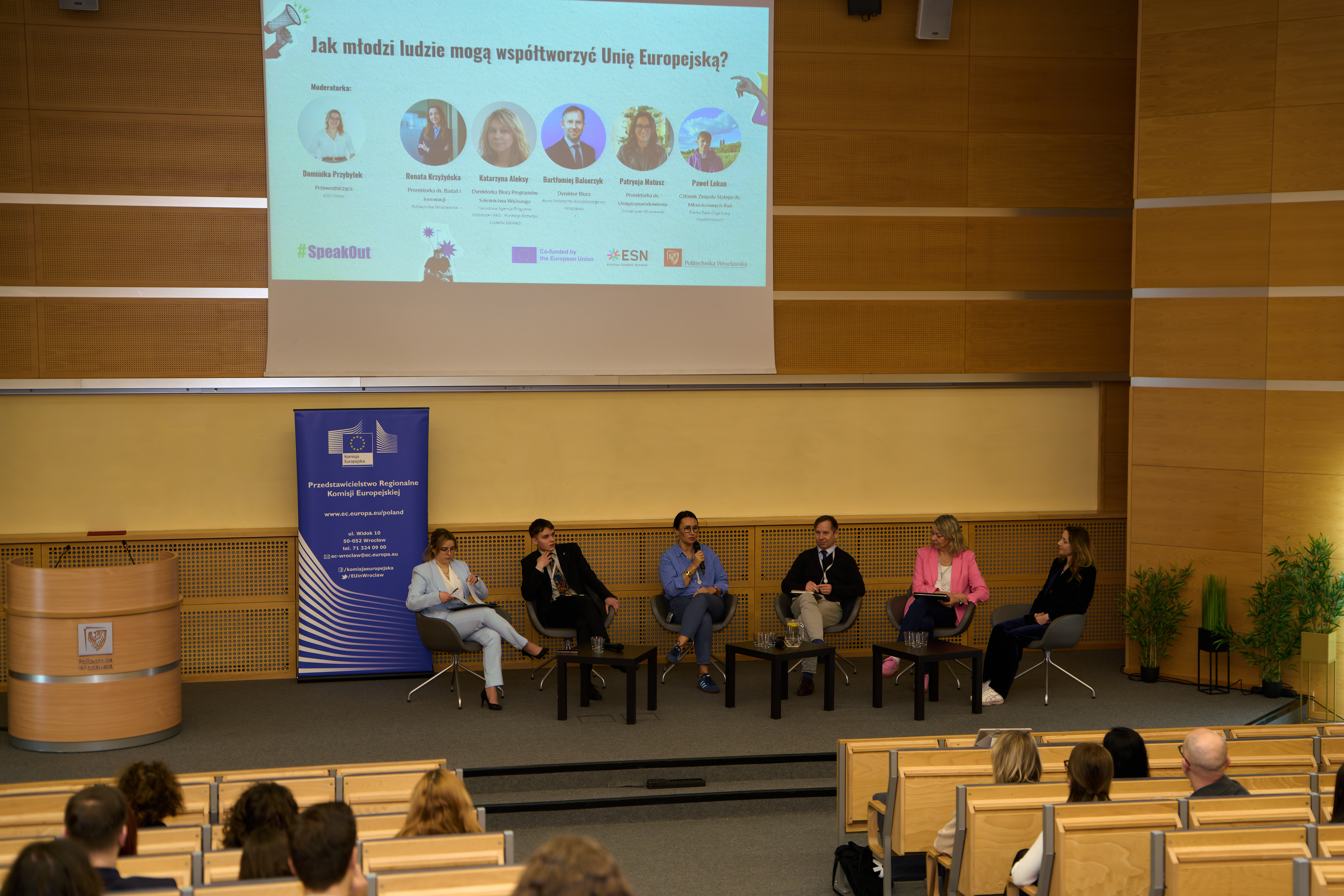
The first item on the agenda was the panel discussion "How can young people co-create the European Union?", which focused on the role of youth in decision-making processes at the academic, national and European levels. Experts emphasised that youth engagement is no longer just an opportunity, but a necessity, especially in the context of the challenges facing the European Union.
In his keynote speech, Member of the European Parliament Bogdan Zdrojewski underlined that decisions made today will shape the European Union for decades to come, and that the voice of the younger generation is crucial in this process.
Speak Out and the role of mobility in shaping identity
The next part of the programme introduced the Speak Out project and presented the findings of a report on the role of international mobility in building European identity among students.
The results clearly showed that international mobility, including programmes such as Erasmus+, has a significant impact on young people’s attitudes. Those with mobility experience are more likely to identify as Europeans, better understand how the European Union functions and are more willing to engage in civic life.
It was also emphasised that international experiences do not weaken local identity, but rather complement it, creating a broader European perspective.
From inspiration to action - local and European engagement
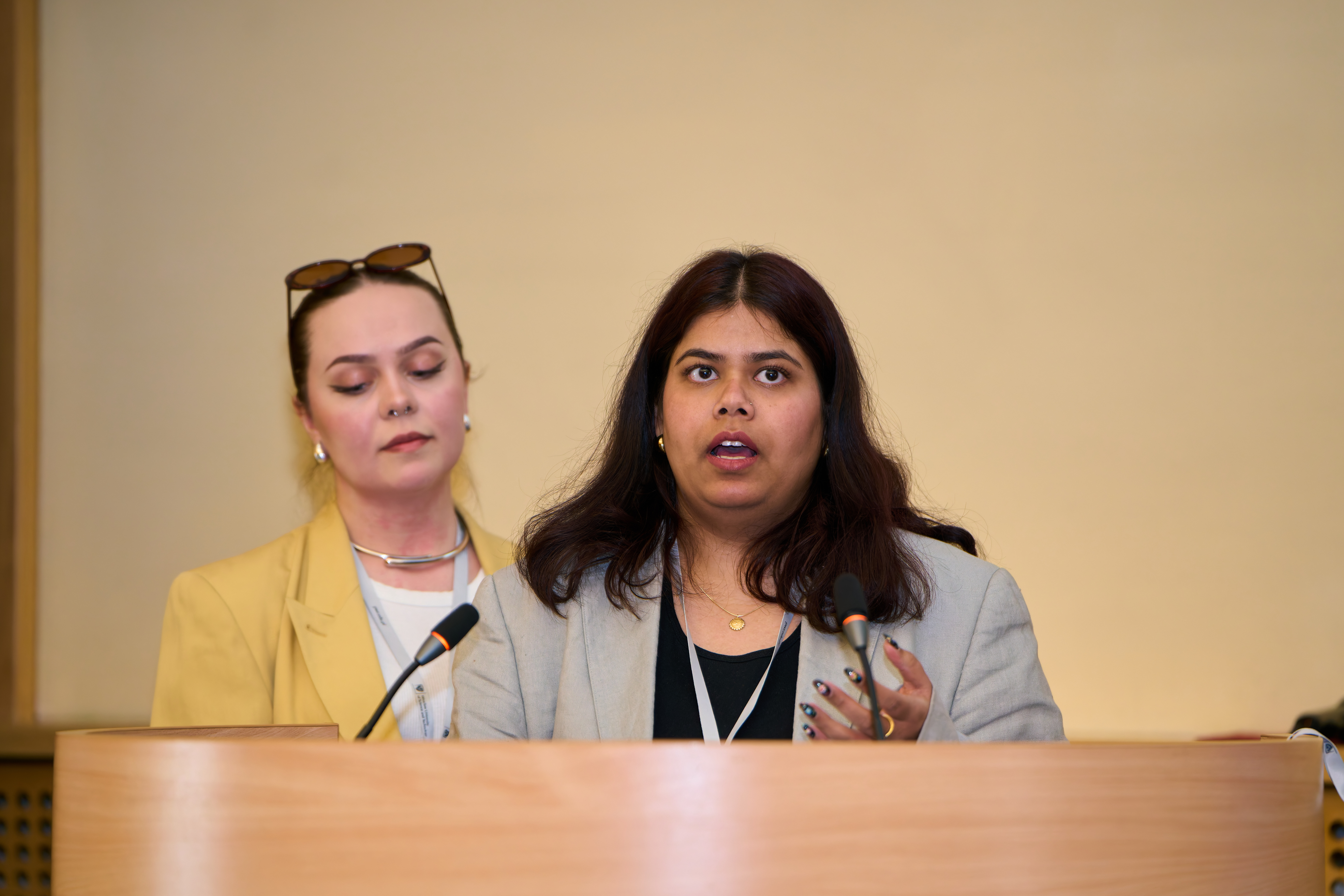
In the following part, participants explored concrete tools and initiatives that enable engagement in European affairs. The European Commission Representation encouraged active participation in consultations and decision-making processes, highlighting the accessibility of various forms of civic participation.
The presentation of the "Let’s build EUtopia!" event demonstrated how local initiatives can create meaningful spaces for dialogue about Europe and activate young people within their communities.
Thematic sessions - a space for participants’ voices

One of the key elements of the conference were the interactive thematic sessions, which allowed participants to exchange views directly.
The session on the future of Erasmus+ after 2027 focused on the need to increase accessibility and strengthen the programme’s role in building European identity.
The session on volunteering and solidarity explored opportunities offered by the European Solidarity Corps, as well as barriers that still limit youth participation.
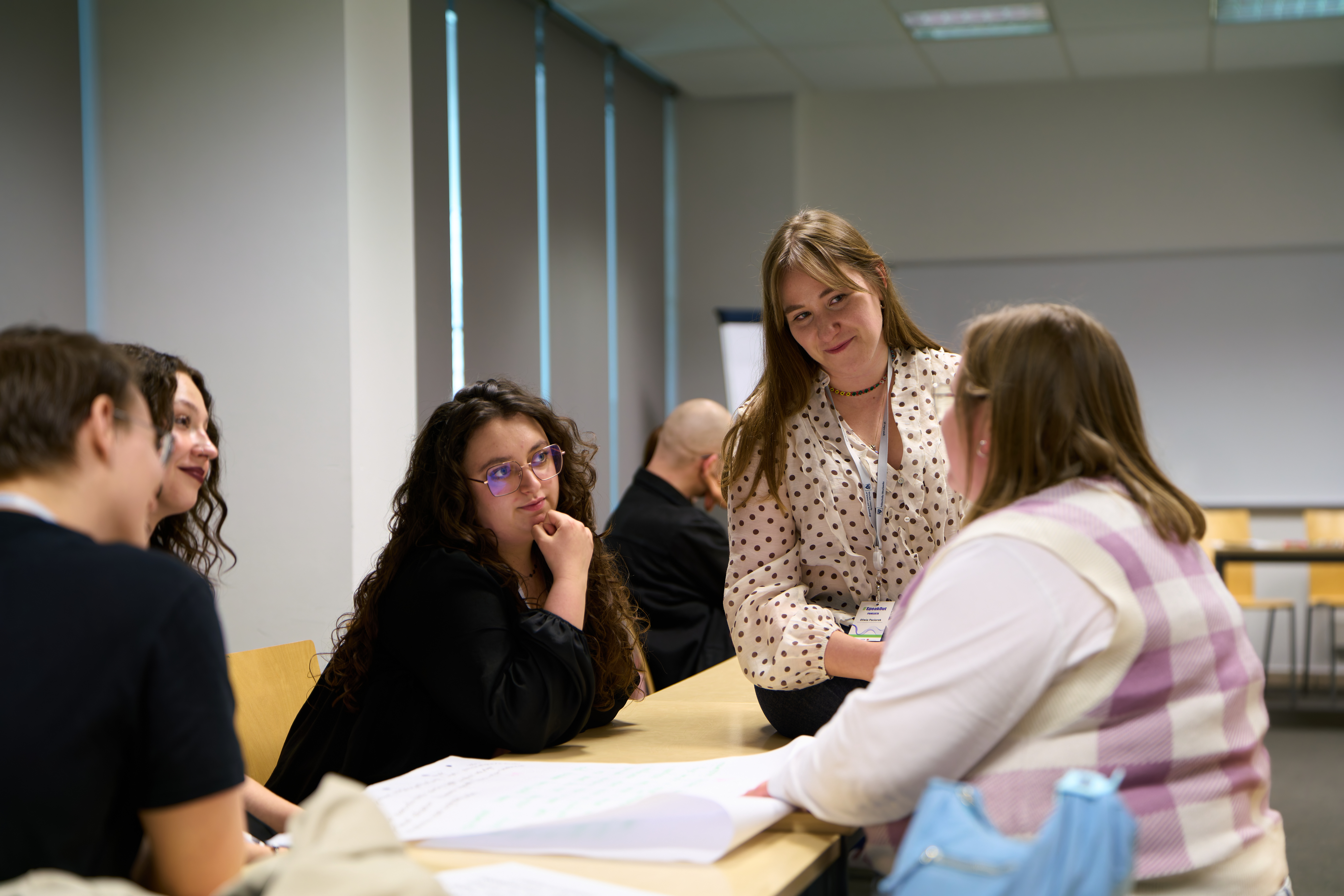
Meanwhile, discussions on local partnerships examined how young people can collaborate with public authorities and translate their experiences into concrete actions within their communities.
Shared reflections and expert panel
After the thematic sessions, participants gathered to share key conclusions. The discussion highlighted major challenges such as limited access to information, systemic barriers and the need for greater trust in young people.
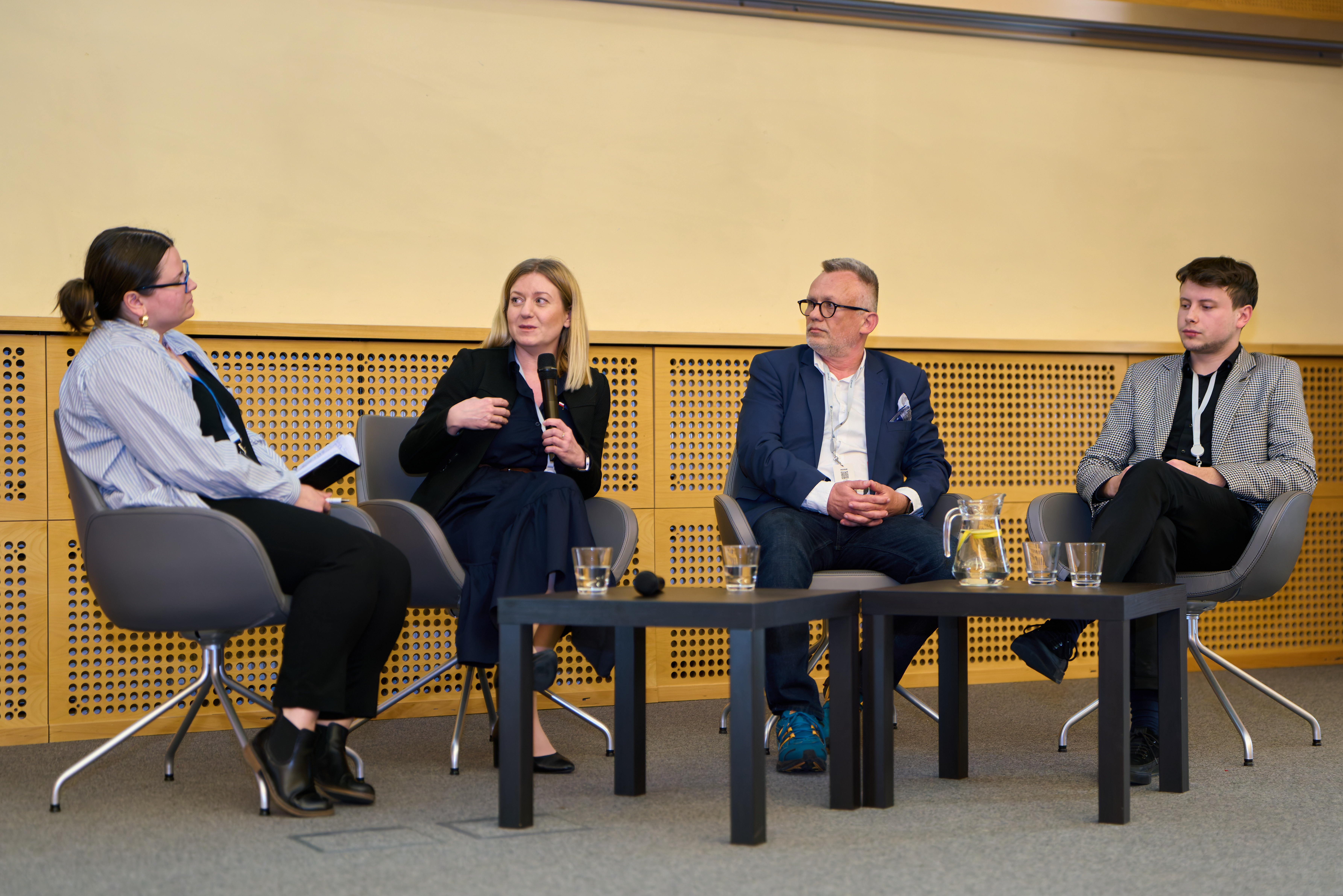
The conference concluded with the panel "Civil society in Poland and Europe: young people at the centre of change", which focused on strengthening dialogue between youth, public institutions, and civil society organisations.
Voices of participants - youth as co-creators of Europe
The most important element of the conference, however, were the voices of the participants themselves.
When asked about their role in Europe, young people emphasised the importance of initiative, courage and action. They pointed out that real impact begins with engagement, often at the local level and with the belief that their voice matters.
Participants increasingly see themselves not only as the future of Europe, but also as its present. They spoke about responsibility for their communities, the desire to create change and the importance of inspiring others to act.
There was also a strong sense that the European Union is becoming more accessible, for many, it is no longer a distant structure, but a space of real opportunities and action.
At the same time, participants highlighted the need for better communication about available initiatives, simpler procedures and greater openness of institutions to youth voices.
The conference demonstrated that young people not only want to be part of the European debate, but are ready to actively shape it. However, it is crucial to create spaces where their voices are truly heard and taken into account.
Because, as participants emphasised, Europe is not only about institutions. It is прежде all about people, and its future depends on their engagement